
Norrd
NEXUS N20D w/USB - 12x8 DSP with Dante
N20D
The NEXUS N20D is a mid-scale digital audio processor combining 12 analog inputs, 8 analog outputs, and 8×8 Dante channels on an upgraded ADI SHARC 21489 SIMDx2 platform at 24-bit/48 kHz. With 113 dB dynamic range and under 3 ms system delay, it delivers the full NEXUS DSP suite including AEC, ANS, AGC, ANC, auto mixer, and audio ducking. Designed for mid-to-large conference rooms, courtrooms, and multi-zone installations requiring mixed analog and networked audio.
12×8 analog I/O
More mic input capacity
8×8 Dante
Network audio included
Full DSP toolkit
AEC, ANS, AGC, automix
Key Features
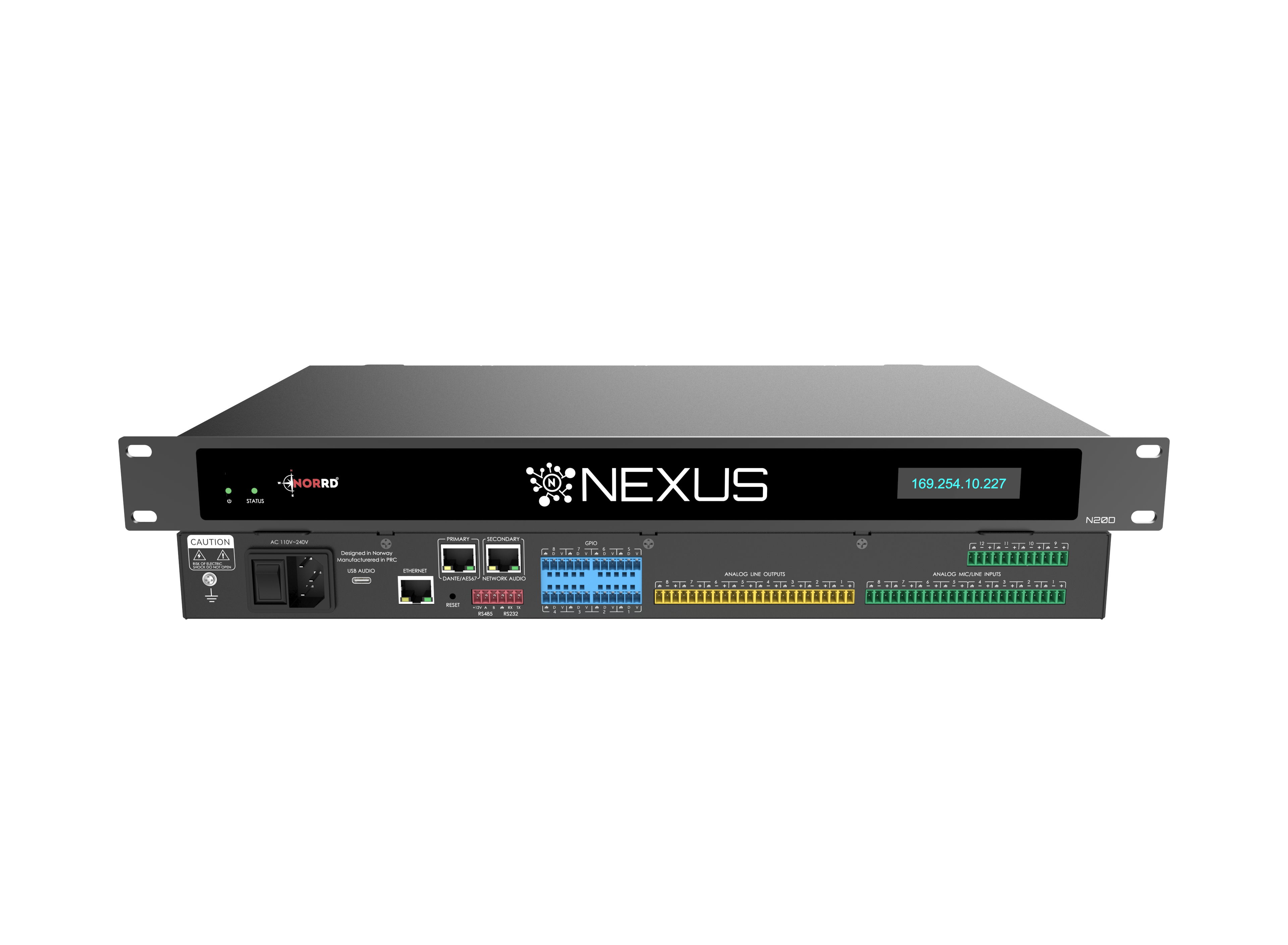
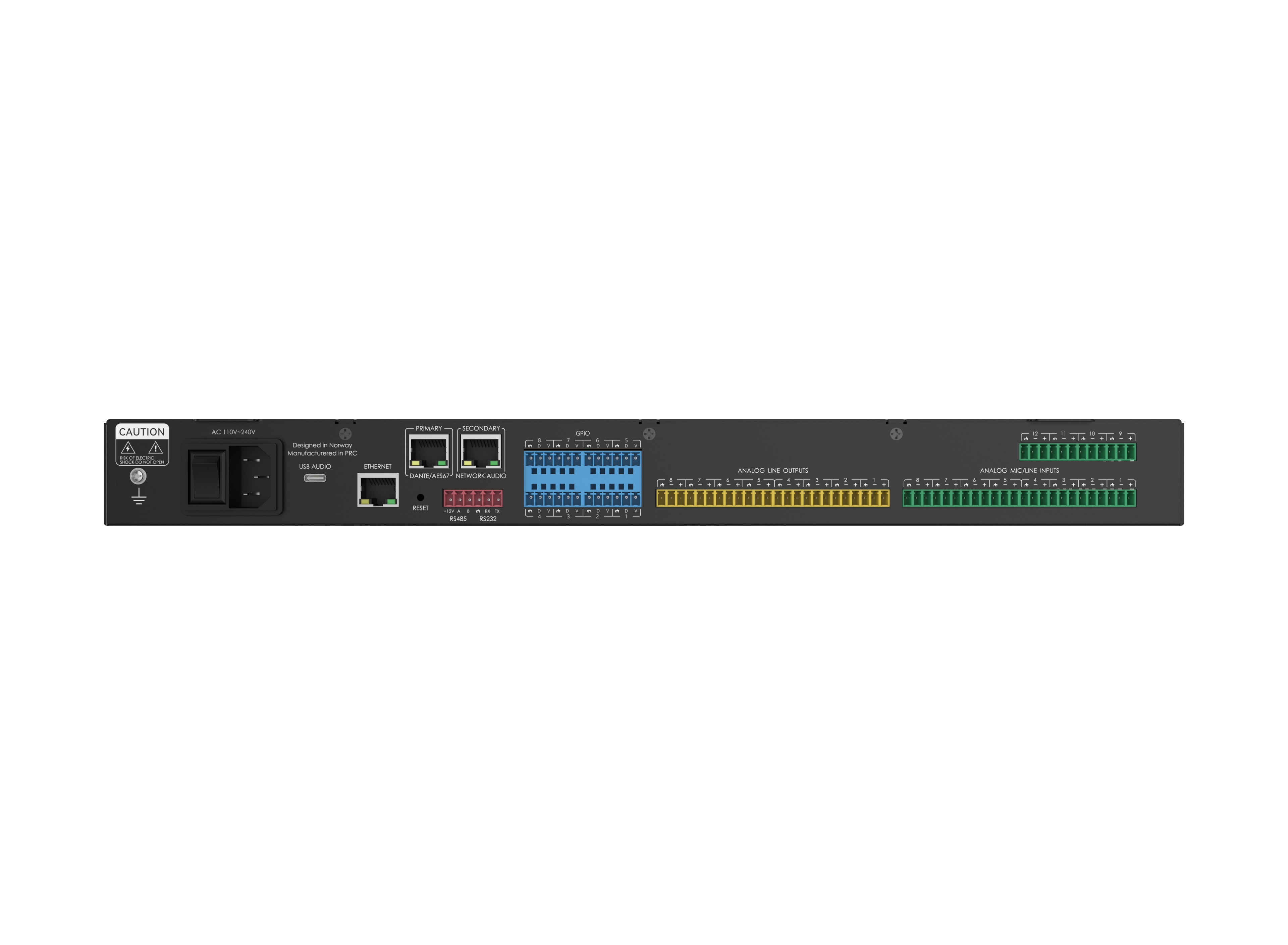
12 balanced analog inputs / 8 balanced analog outputs with +48 V phantom power
8×8 Dante networked audio channels
Upgraded ADI SHARC 21489 @ 450 MHz SIMDx2 processor
Full-duplex AEC, ANS, AGC, ANC, auto mixer, and audio ducking
Per-channel adaptive feedback suppression (NHS)
Full mixing matrix with adjustable input gain (0–48 dBu, 3 dB steps)
USB-C sound card with full DSP processing on input and output
8 independent presets with channel linking and grouping
RS-232, UDP, and TCP control with iOS/Windows software
Software-programmable wall panels (2 types)
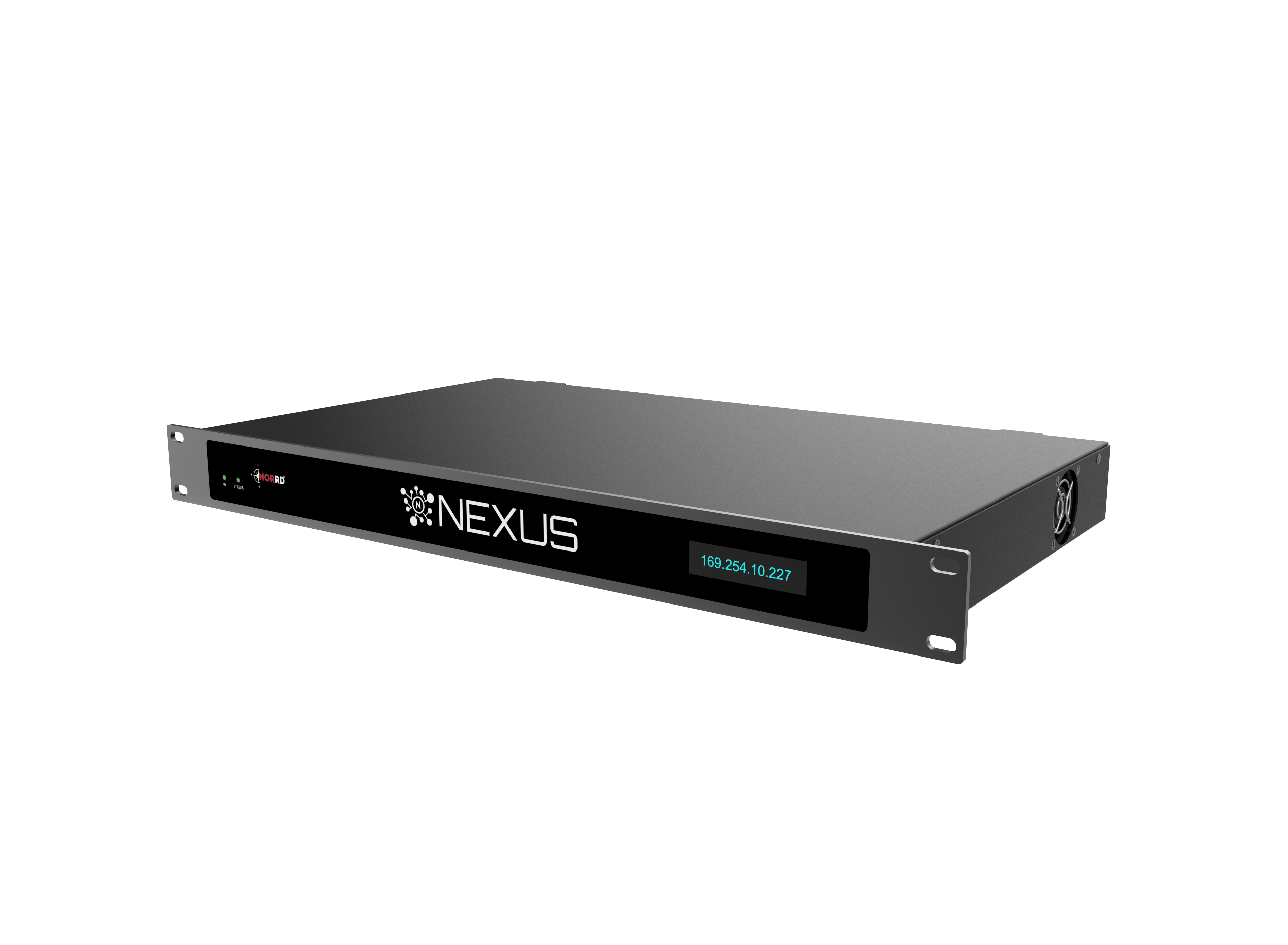
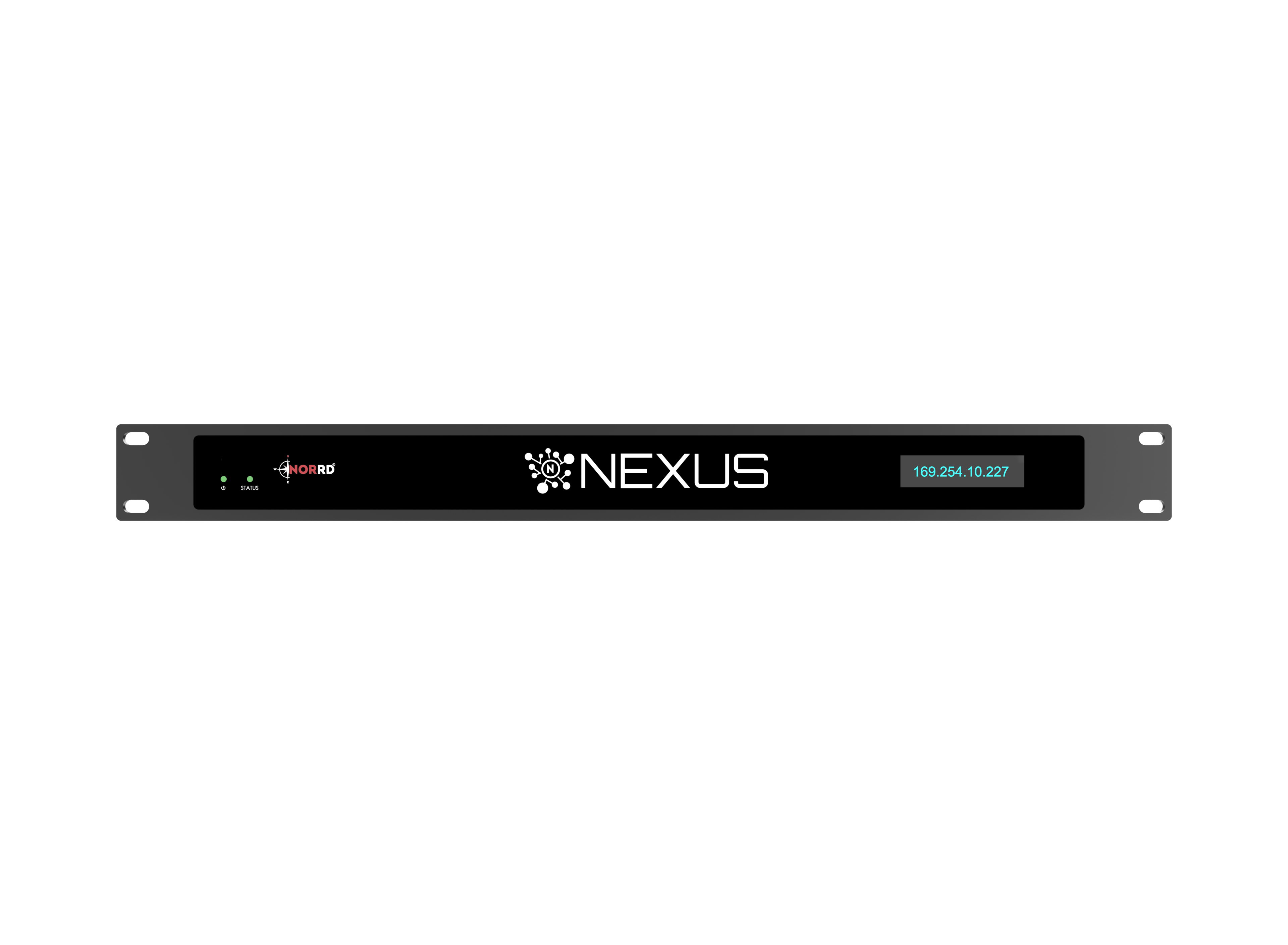
AC 110–240 V power — 1U rack-mount (482 × 260 × 45 mm)
Description
The N20D steps up to the SIMDx2 variant of the ADI SHARC 21489 processor running at 450 MHz, providing the headroom to handle 12 analog inputs, 8 analog outputs, and 8×8 Dante channels while maintaining under 3 ms system delay. This positions it for rooms where the microphone count exceeds what a smaller processor can accommodate — divisible conference rooms, courtrooms with witness and jury zones, council chambers, or multi-purpose spaces with separate presenter, audience, and interpreter feeds.
The full DSP suite runs on every channel without prioritization or feature gating. AEC operates in full-duplex across all paths, which matters in rooms where multiple video conference endpoints or acoustic zones overlap. ANS cleans up per-channel background noise, while the auto mixer manages open microphone discipline across up to 12 simultaneous analog sources — critical when a room has table microphones, ceiling arrays, and a lectern active at the same time. AGC smooths the level differences between a softly spoken witness and a projecting chairperson, and ambient noise compensation adjusts output to track the room's changing noise floor from audience movement or HVAC cycling. Audio ducking provides automatic priority override for paging, fire alarm relay, or interpreter channels.
Per-channel adaptive feedback suppression works independently on each input, identifying and notching feedback frequencies without affecting adjacent channels. In rooms with complex acoustic paths — hard-walled council chambers, for example — this independence prevents one channel's correction filters from reducing intelligibility on another. The full mixing matrix allows unrestricted routing across all analog, Dante, and USB paths. Eight independent presets store complete system configurations for different room modes.
The USB-C sound card interface participates fully in the DSP chain. Audio from UC platforms such as Microsoft Teams or Zoom is processed through the same ducking, EQ, mixing, and routing as analog and Dante sources — there is no separate processing path or reduced feature set for the conferencing connection. The combination of local analog I/O and 8×8 Dante connectivity addresses facilities that are transitioning to AV-over-IP while retaining legacy analog microphones and amplifiers. All analog inputs provide +48 V phantom power with gain adjustable from 0 to 48 dBu in 3 dB steps.
Multi-device Ethernet management allows several NEXUS units to be administered from a single software session, simplifying commissioning across a building. Control via RS-232, UDP, and TCP supports direct integration with Crestron, AMX, Extron, and other control systems. Two types of software-programmable wall panels provide room operators with preset recall and volume adjustment without access to the full configuration. The N20D is housed in a 1U rack-mount chassis (482 × 260 × 45 mm) powered by AC 110–240 V.
Technical Specifications
Downloads
Product Datasheet
Auto-generated product datasheet (one-pager)